Contents
1. What Is Bakery Production Line Automation?
2. Why Automate a Bakery Production Line?
3. What Machines Are Used in an Automated Bakery Production Line?
4. How to Choose the Right Bakery Production Line
5. Examples of Automated Bakery Production Lines
6. Why Choose a Customized Bakery Automation Solution?
7. FAQ
The bakery industry is becoming increasingly automated as bakeries and food manufacturers look for ways to increase production capacity, maintain consistent quality, reduce dependence on manual labor, and improve overall production efficiency.
For a small bakery, individual machines may be sufficient. However, when production volumes increase, simply adding more standalone equipment is not always the most efficient solution. An automated bakery production line connects multiple stages of production into an integrated workflow, allowing products to move smoothly from dough preparation to finished goods.
But how does bakery automation actually work? What equipment is required? And how can a bakery choose the right production line?
This guide explains the fundamentals of industrial bakery automation and the key factors to consider when planning an automated bakery production system. Whether you are comparing industrial bakery automation suppliers in China or evaluating equipment from other regions, the sections below will help you make a well-informed decision.
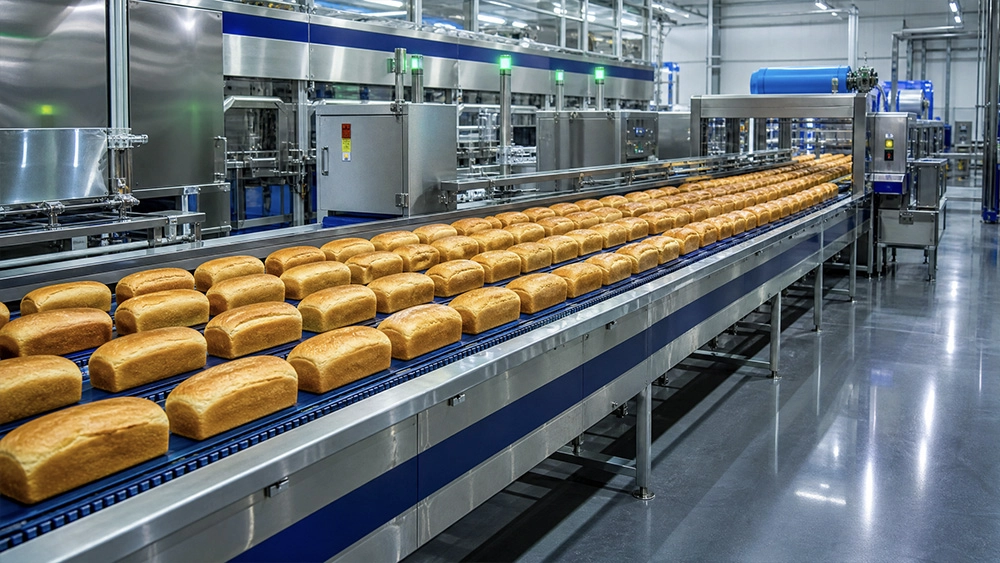
Bakery production line automation refers to the use of interconnected machinery and control systems to automate multiple stages of the bakery manufacturing process.
Instead of relying on workers to manually transfer dough and products between individual machines, an automated system coordinates different pieces of equipment through conveyors, sensors, programmable controls, and other automation technologies.
A typical automated bakery production process may include:
Dough Preparation → Dividing → Rounding → Forming → Proofing → Baking → Cooling → Slicing/Filling → Packaging
The exact configuration depends on the product being manufactured.
For example, a bread production line may require dough mixing, dividing, rounding, moulding, proofing, baking, cooling, and slicing equipment. A croissant production line may require dough sheeting, cutting, separating, and forming equipment, followed by proofing and baking.
The key difference between a standalone bakery machine and an automated production line is integration.
A standalone machine performs one specific operation. A production line connects several operations into a coordinated manufacturing process.
This makes bakery automation particularly valuable for commercial bakeries, central kitchens, food factories, and industrial-scale manufacturers where production volume and consistency are important.
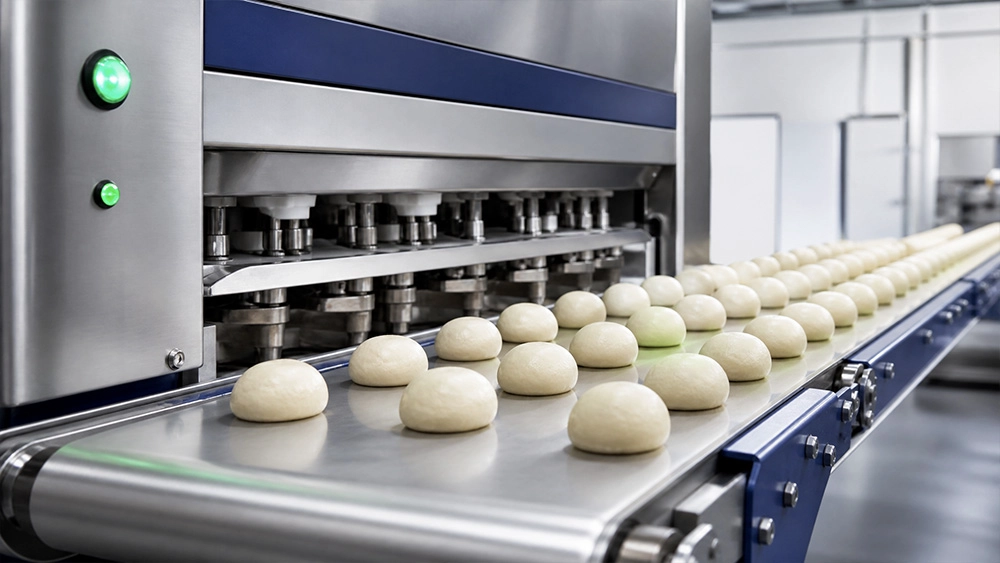
Investing in bakery automation is not simply about replacing manual work with machines. A well-designed production line can improve the entire manufacturing process.
Higher Production Capacity
One of the primary reasons bakeries invest in automation is to increase output.
Manual production can become a bottleneck when order volumes increase. Automated equipment can continuously process dough and bakery products at a controlled speed, allowing manufacturers to achieve significantly higher production capacity.
This is particularly important for factories supplying supermarkets, restaurant chains, wholesalers, and food-service companies.
Consistent Product Weight, Size and Shape
Consistency is essential in industrial bakery production.
Products with different weights, dimensions, or shapes can create problems during baking, packaging, transportation, and quality inspection.
Automated equipment such as dough dividers, rounders, moulders, sheeters, and forming machines can help maintain more consistent product specifications throughout production.
This is especially important for products such as bread, burger buns, baguettes, bagels, pizza bases, croissants, and tart shells.
Reduced Dependence on Manual Labor
Repetitive operations such as dividing dough, rounding, forming, transferring, and slicing can require considerable manpower when performed manually.
Automation reduces the amount of repetitive manual handling required and allows employees to focus more on production monitoring, quality control, equipment operation, and other higher-value tasks.
For factories experiencing labor shortages or rising labor costs, this can be an important factor when evaluating automation.
Improved Production Efficiency
An integrated production line can reduce unnecessary movement of materials between different production stages.
Instead of manually transferring products from one machine to another, conveyors and automated systems can create a continuous production flow.
This can reduce production interruptions, improve material handling efficiency, and make the entire manufacturing process easier to manage.
Better Hygiene and Process Control
Food production requires careful control of hygiene and handling procedures.
Reducing unnecessary manual handling can help create a more controlled production environment. Automated equipment can also provide more consistent processing conditions for operations such as dough forming, proofing, and baking.
Easier Production Scaling
Automation can also help bakeries prepare for future growth.
A bakery may initially require a semi-automatic system and later expand its production capacity by adding equipment, conveyors, or additional processing stages.
Therefore, production-line planning should consider not only today's production requirements but also potential future demand.
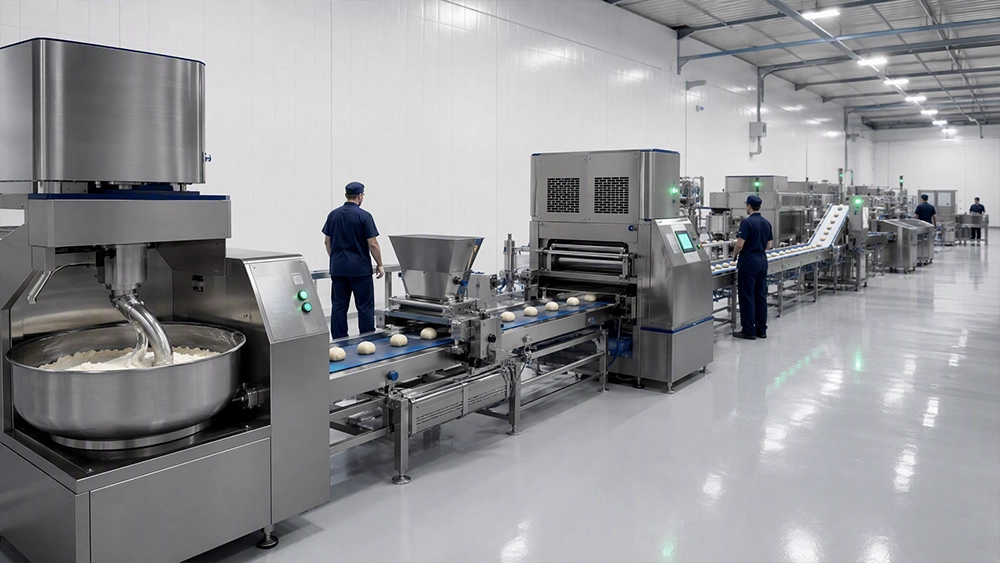
There is no universal machine configuration for every bakery. Equipment should be selected according to the product, production capacity, process requirements, and factory layout.
Common equipment includes:
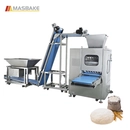
Dough Mixers
Dough mixers prepare and develop the dough before it enters the forming process.
Depending on the recipe and product, different mixer types and capacities may be required.
Dough Dividers and Rounders
Dough dividers divide bulk dough into portions of a specified weight, while rounders shape the portions into uniform dough balls.
These machines are widely used in bread, bun, pizza, and other dough-based production lines.
Dough Sheeters and Moulders
Dough sheeters reduce dough to a controlled thickness, while moulders shape dough according to the requirements of the final product.
They are particularly important for products such as toast, baguettes, pizza, and other shaped bakery products.
Proofing Equipment
Proofing provides controlled temperature and humidity conditions for dough fermentation.
An automated production system may use intermediate proofers, final proofers, or continuous proofing systems depending on the production process.
Bakery Ovens
The oven is one of the most important stages of the production line.
Depending on the product and capacity, manufacturers may use rotary ovens, convection ovens, deck ovens, tunnel ovens, or other industrial baking systems.
Cooling Systems
After baking, products need to be cooled to an appropriate temperature before further processing.
Automated cooling conveyors or cooling systems can provide controlled product transfer while helping prepare baked goods for slicing, filling, or packaging.
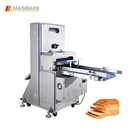
Slicing and Filling Equipment
For products such as toast bread and sandwiches, automated slicing and filling equipment can be integrated into the downstream production process.
Conveyors and Auxiliary Equipment
Conveyors connect individual machines and control the movement of products throughout the production line.
Other auxiliary equipment may include transfer systems, feeding systems, product alignment devices, control systems, and packaging equipment.
The final configuration should be designed as one coordinated production system, rather than simply placing individual machines next to each other. This level of coordination is easiest to achieve when all machines come from a single bakery automation equipment factory with complete production-line engineering experience.
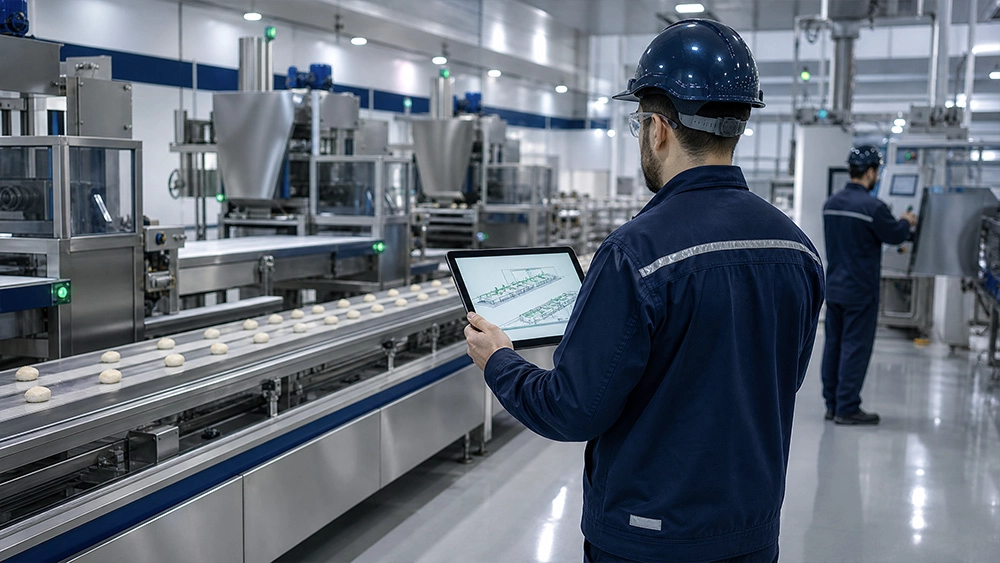
Choosing an automated bakery production line requires more than selecting machines based on their individual specifications.
Several factors should be evaluated before designing the system.
Product Type
Start with the product.
Bread, toast, baguettes, croissants, pizza, bagels, tart shells, and other bakery products require different processing methods.
The production line should therefore be designed around the complete product process.
Required Production Capacity
Determine the target production capacity before selecting equipment.
Capacity may be measured in:
Pieces per hour
Pieces per minute
Kilograms per hour
Tons per hour
The capacity of each machine should be compatible with the rest of the production line.
A high-capacity machine connected to a low-capacity machine can create a production bottleneck.
Product Size and Specifications
Product weight, dimensions, shape, thickness, filling, and recipe characteristics can all influence equipment selection.
For example, a production line designed for small burger buns may be very different from one designed for large artisan bread.
Factory Layout
Factory space is another critical consideration.
Equipment dimensions, conveyor direction, working height, operator access, material flow, electrical requirements, and maintenance space should all be considered during the design stage.
A good production line should fit the factory rather than forcing the factory to adapt inefficiently to a standard machine configuration.
Level of Automation
Not every bakery needs a fully automatic production line.
A growing bakery may benefit from a semi-automatic system, while a large food factory with high-volume production may require a fully automated solution.
The right level of automation should balance production requirements, labor availability, investment budget, and future growth.
Existing Equipment
If a bakery already has mixers, ovens, proofers, or packaging equipment, the new automation system may be designed to integrate with existing equipment where practical.
This can help manufacturers upgrade production gradually instead of replacing the entire system at once — an integration capability that an experienced bakery production line manufacturer in China can provide.
Future Expansion
Production requirements can change over time.
When planning a new automated line, it is worth considering whether additional machines, conveyors, or production capacity can be added later.
A flexible system can provide greater value over its operating life.
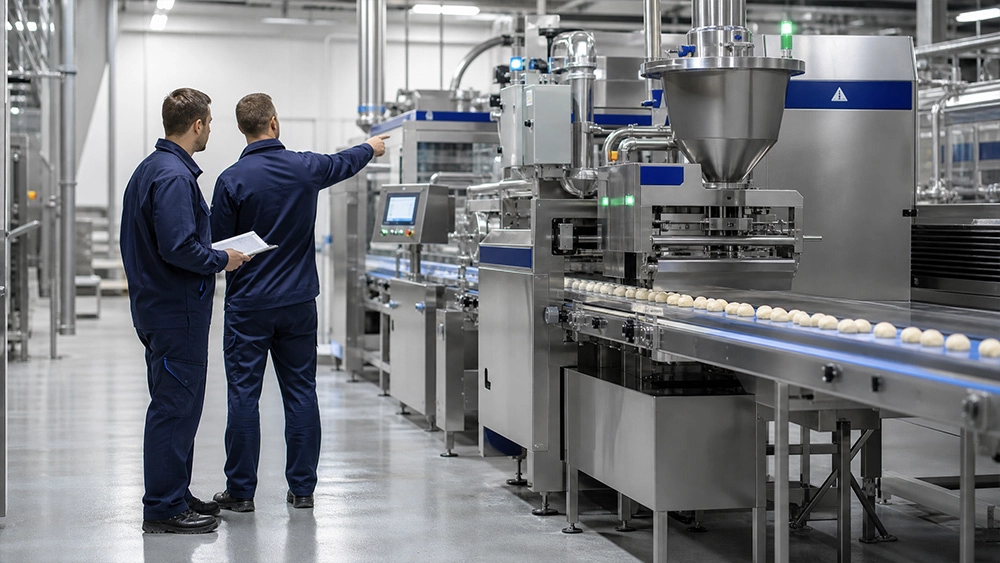
Different bakery products require different automation solutions. Some common applications include:
Automatic Bread and Toast Production Lines
A typical bread production process may include:
Mixing → Dividing → Rounding → Intermediate Proofing → Moulding → Final Proofing → Baking → Cooling → Slicing → Packaging
Automation can help manufacturers produce large quantities of bread with consistent weight, dimensions, and quality.
Automatic Baguette Production Lines
Baguette production requires precise dough dividing, rounding, resting, and forming before proofing and baking.
An automated line can coordinate these stages to achieve stable production efficiency.
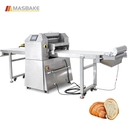
Automatic Croissant Production Lines
Croissant production involves specialized dough sheeting, cutting, separating, and forming processes.
An automated croissant production line can connect these operations with proofing and baking equipment to support continuous large-scale production.
Automatic Pizza Production Lines
Industrial pizza production may include dough dividing, pressing or sheeting, forming, sauce application, topping, baking, cooling, and packaging.
Automation is particularly useful when manufacturers need high and consistent production capacity.
Automatic Bagel Production Lines
Bagel production requires accurate dough portioning and forming.
Automated dividing and forming equipment can help manufacturers maintain consistent product specifications while increasing output.
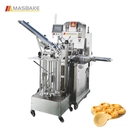
Automatic Tart Shell Production Lines
Tart shell production is another process well suited to automation because forming large quantities of identical shells manually can be time-consuming.
Automatic forming equipment can improve production efficiency and consistency while reducing repetitive manual operations.
The important point is that automation should be product-specific. The ideal production line is determined by the product and manufacturing requirements rather than by a fixed list of machines.
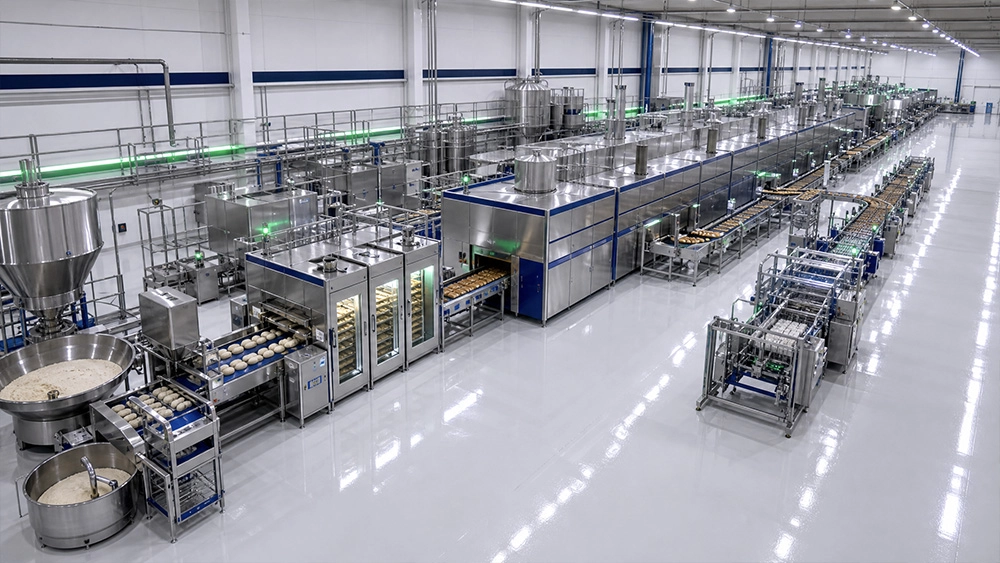
Every bakery factory has different products, production targets, building dimensions, labor conditions, and existing equipment.
For this reason, a customized automation solution can often provide better results than a standard combination of machines.
A professional bakery automation manufacturer should be able to evaluate factors such as:
Product type and specifications
Target production capacity
Production process
Factory layout
Existing equipment
Degree of automation
Conveyor configuration
Electrical and utility requirements
Future production expansion
The goal is to create a coordinated system in which each machine works effectively with the next stage of production.
At MASBAKE, bakery automation solutions are developed according to the specific requirements of commercial bakeries and industrial food manufacturers. From individual dough-processing equipment to complete production lines, the system can be configured around different bakery products, production capacities, and factory layouts.
Whether a manufacturer is planning a new bakery factory, upgrading an existing production facility, or replacing manual processes with automated equipment, the first step is to define the product, target output, production process, and available space.
Start Planning Your Bakery Automation Project
Choosing the right production line is an important investment decision. Instead of selecting machines individually, consider the entire production process from raw materials to finished products.
If you are planning to automate your bakery production, MASBAKE can help develop a production-line solution based on your product, required capacity, and factory layout.
Contact MASBAKE to discuss your bakery automation requirements and explore a customized industrial production solution.
What is an automated bakery production line?
An automated bakery production line is an integrated system of bakery machines, conveyors, and control systems that automates multiple stages of production, from dough preparation and forming to baking and downstream processing.
What machines are needed for a bakery production line?
The equipment depends on the product and production process. Common machines include dough mixers, dividers, rounders, moulders, sheeters, proofers, ovens, cooling systems, slicers, filling equipment, conveyors, and packaging machines.
How do I choose the right bakery production capacity?
Start by determining your target output in pieces per hour, pieces per minute, kilograms per hour, or tons per hour. The capacity of each machine should then be matched to the overall production flow to avoid bottlenecks.
Can an automated bakery production line be customized?
Yes. Production lines can be configured according to product specifications, production capacity, factory layout, automation level, and existing equipment.
Can new bakery equipment be integrated with existing machines?
In many cases, new equipment can be integrated with existing machinery through conveyors, transfer systems, and customized interfaces. The feasibility depends on the specifications and layout of the existing equipment.
Is a fully automatic production line suitable for every bakery?
Not necessarily. The appropriate automation level depends on production volume, labor availability, investment budget, product requirements, and future growth plans. A semi-automatic solution may be more suitable for some growing bakeries, while high-volume factories may benefit from full automation.
Conclusion
Bakery automation is more than simply purchasing individual machines. A successful automated bakery production line is a coordinated manufacturing system designed around the product, production capacity, factory layout, and long-term business requirements.
By automating repetitive processes and connecting multiple stages of production, bakeries can improve production capacity, consistency, efficiency, and scalability.
For manufacturers planning to move from manual or semi-automatic production toward industrial bakery automation, the right starting point is to evaluate the complete production process and work with an experienced automation partner to develop a suitable solution.
With the right production-line design, bakery automation can transform a series of individual processes into an efficient, consistent, and scalable manufacturing system.