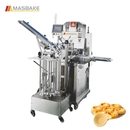
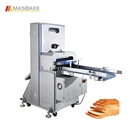
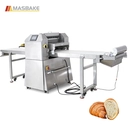
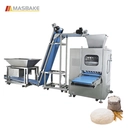
Overview
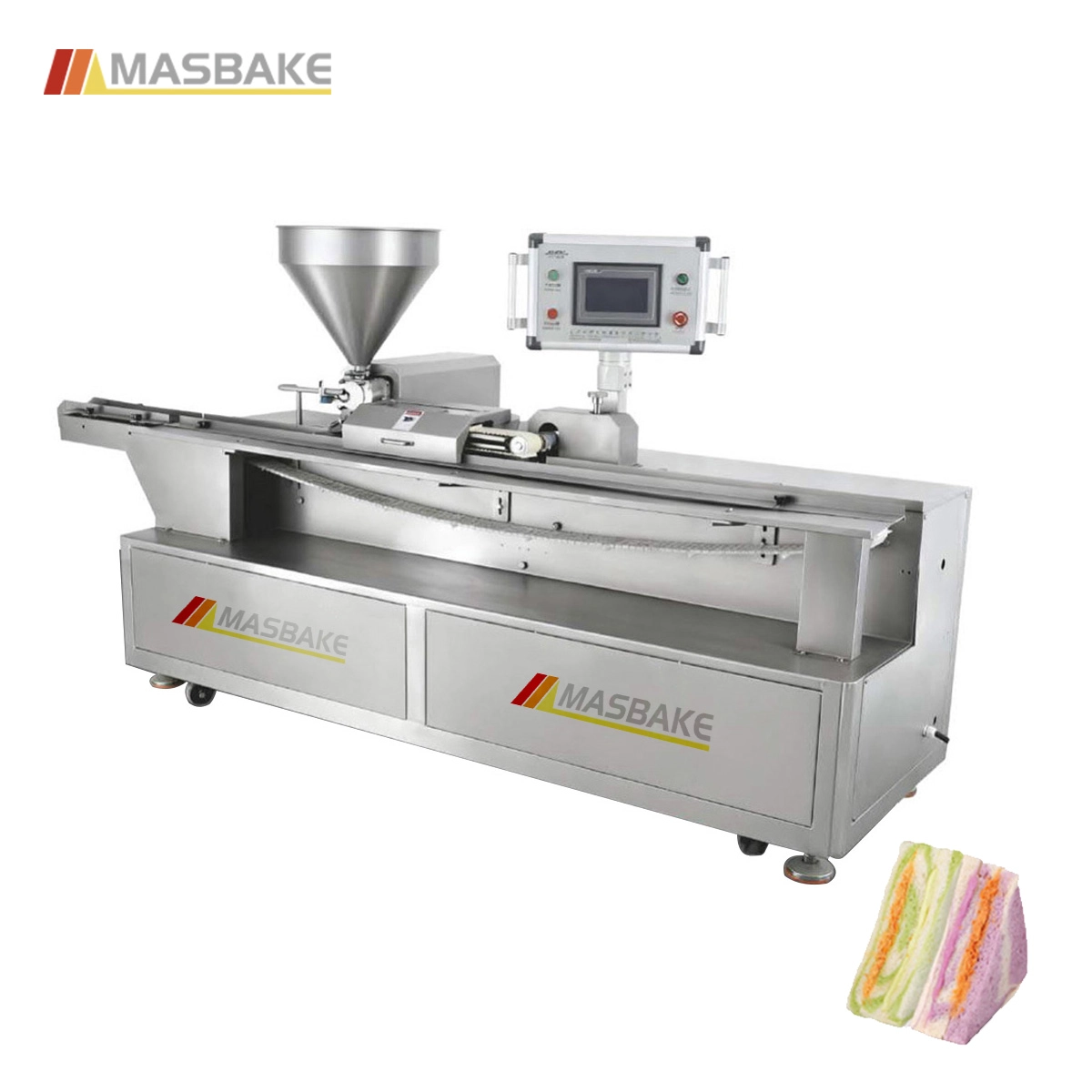
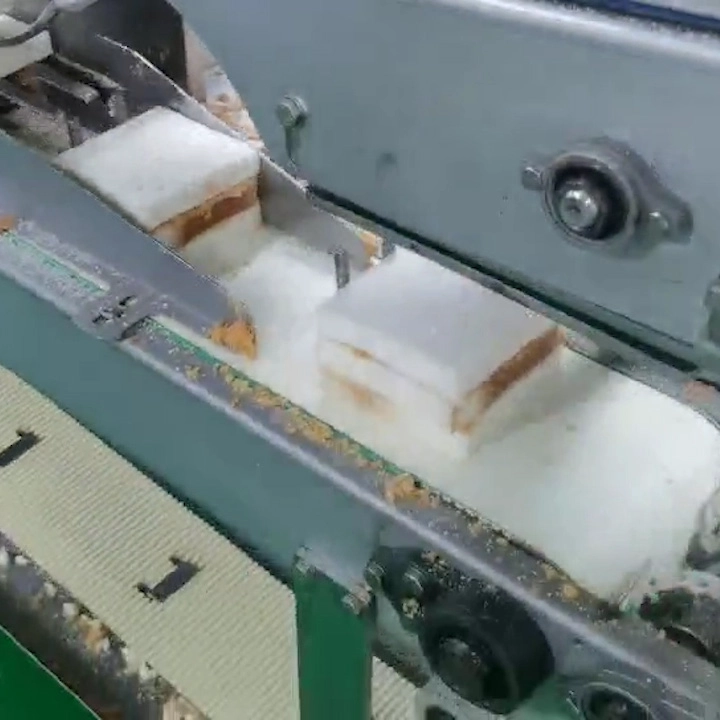
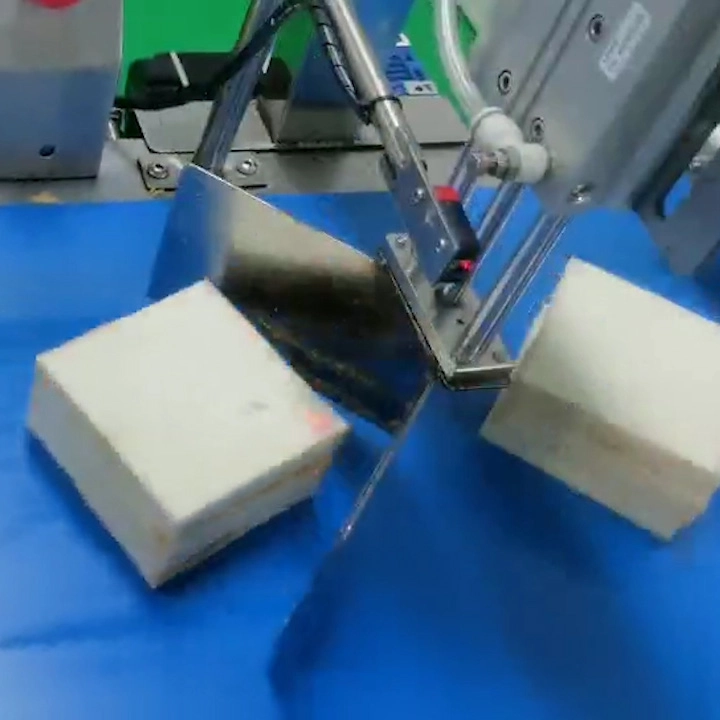
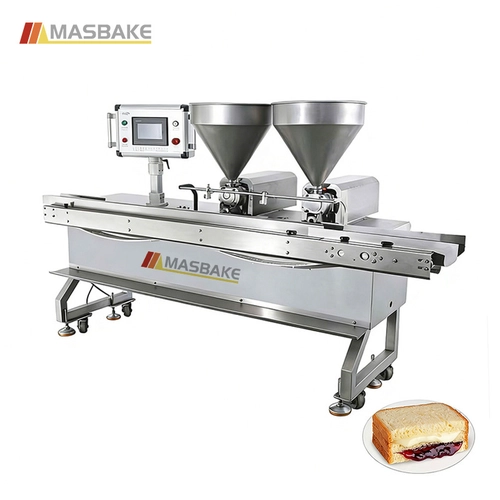
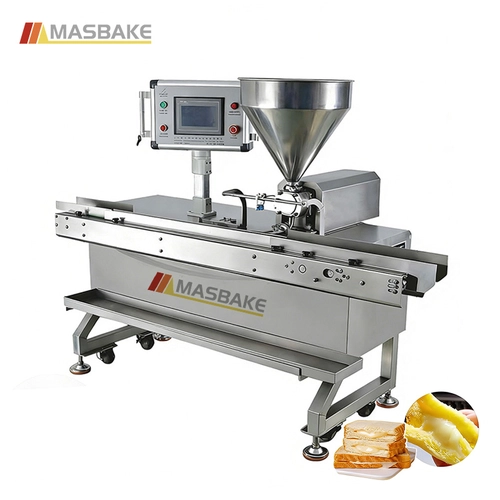
The MS-026 assembles a three-layer sandwich — three toast slices, two filling layers — and then cuts it diagonally into two uniform triangular portions, all in one pass at up to 120 pieces per minute. It is the stage that turns filled bread into a finished, packable product rather than a stacked loaf: registration, filling deposition, layering, and cutting happen on a single frame measuring 2,720 × 1,000 × 1,430 mm, drawing 2.5 kW from a 220 V supply.
Control is servo-based, with photoelectric registration holding each slice against the filling heads and the blade centreline, so the two halves come out symmetrical rather than merely separated. As a production line supplier in China, Masbake agrees conveyor height, product pitch, and control signals with the equipment either side of this unit before shipment, which is what allows it to sit mid-line instead of being an island at the end of a room.
Function
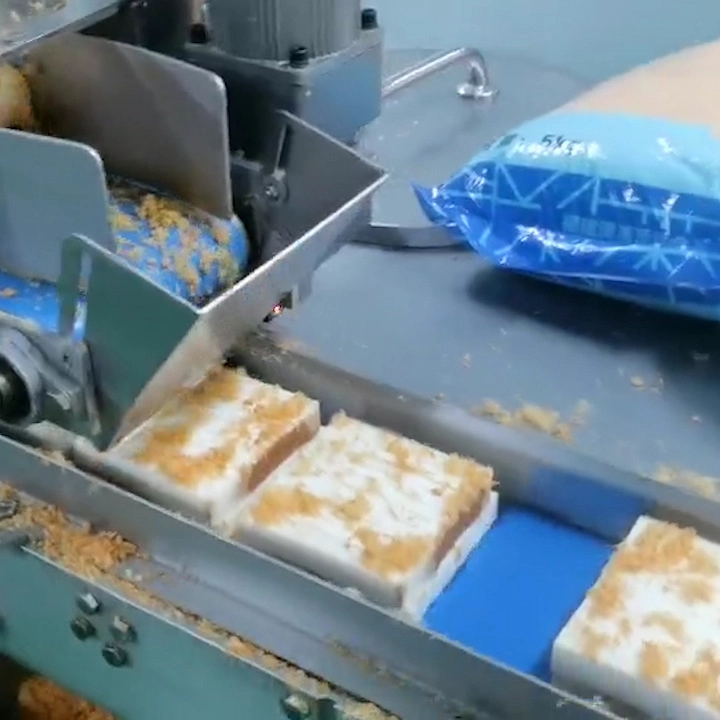
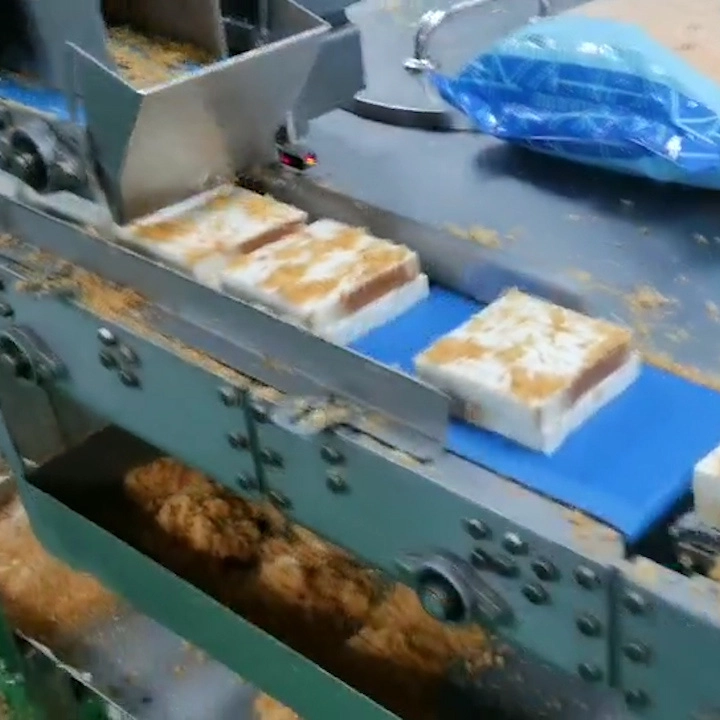
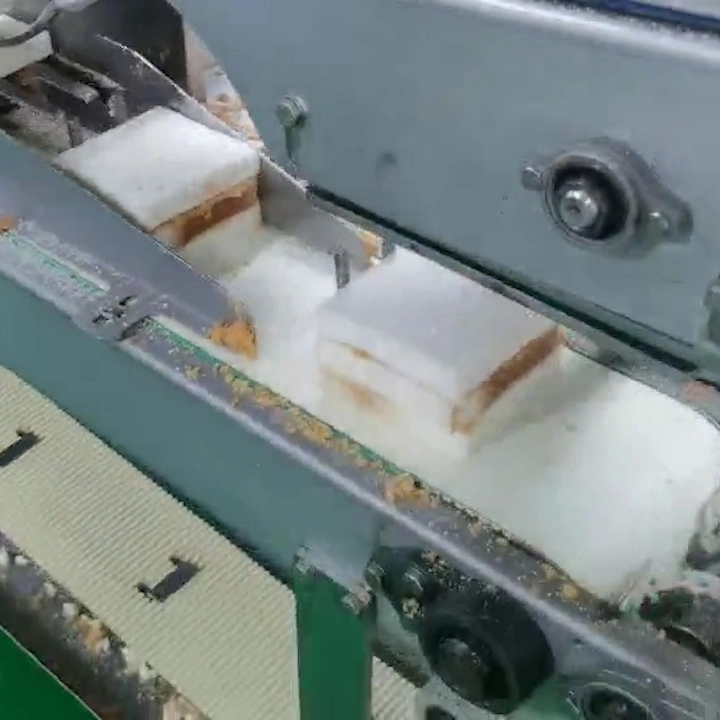
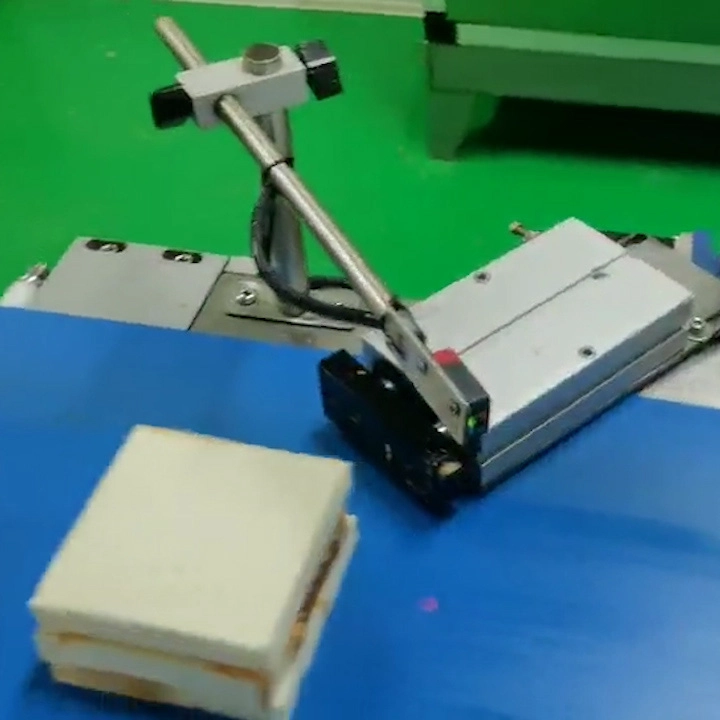
Automatically assemble sandwich with 3 layers of toast bread base and 2 layers of fillings, integrating assembly, filling, and cutting procedures in one machinery line.
Main Features
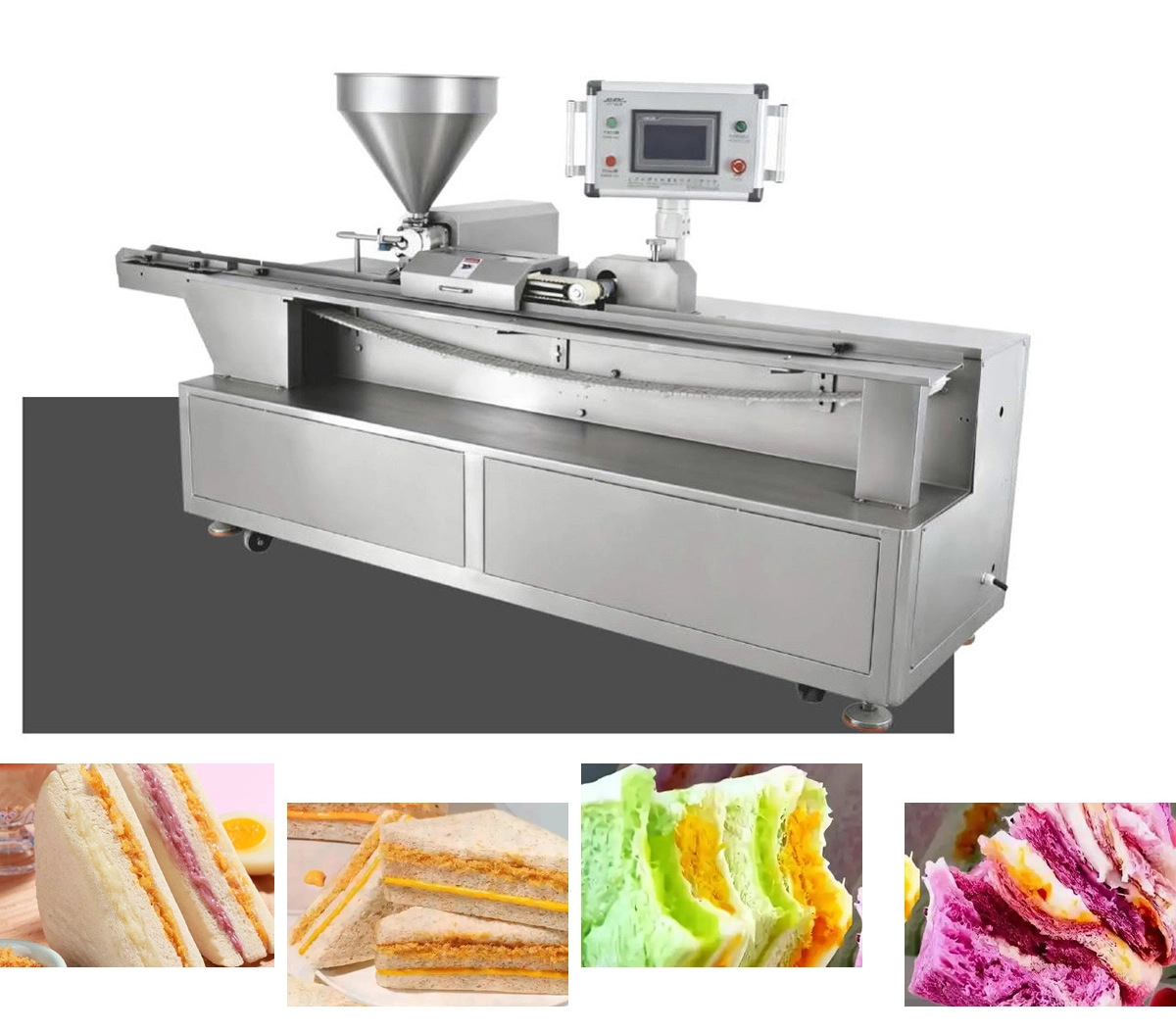
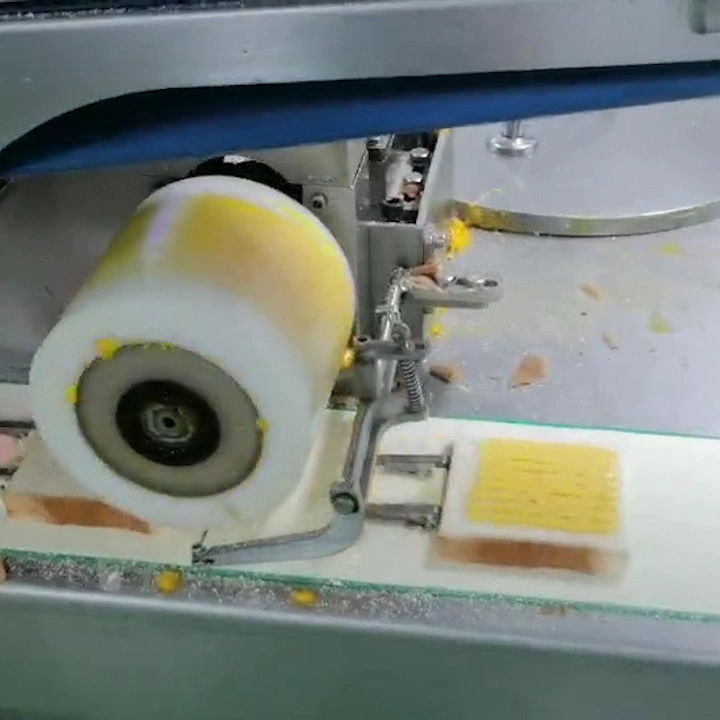
Three Layers, Two Filling Deposits Two independent filling stations lay down cream, jam, or savory paste between three toast slices, giving a true double-fill sandwich rather than a single spread that reads thin at the cut face.
Servo Registration Across Slice Formats Rectangular, square, and round breads are handled by adjusting the positioning parameters rather than changing tooling; the registration system adapts to the incoming slice outline and centres the cut on it.
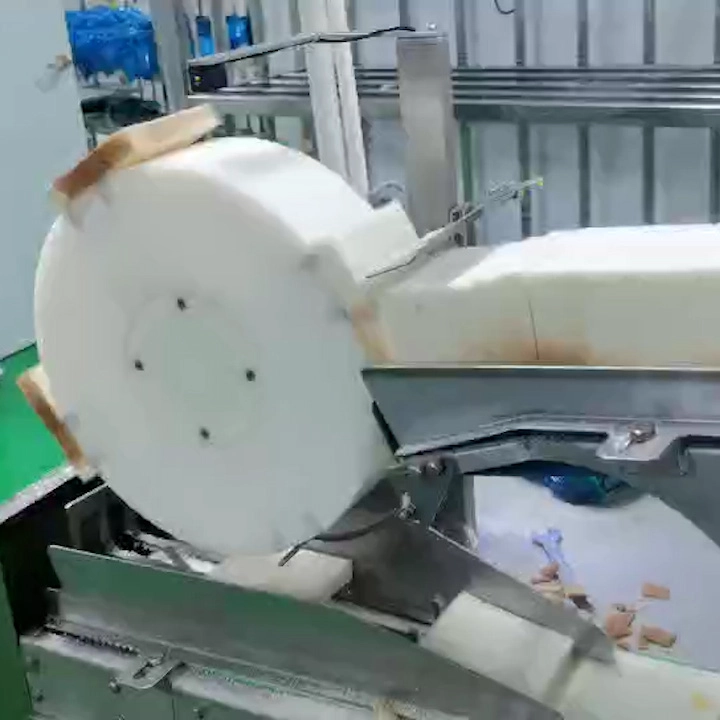
Balanced Diagonal Cutting The cutting head is engineered to apply even force across the full width of the sandwich, so the diagonal face stays clean and the filling does not smear across the cut. Blades are imported, hardened, and long-wearing under continuous duty.
Stable Output at Production Speed Because positioning and cutting are servo-driven rather than mechanically fixed, piece-to-piece variation stays small across a full shift — which is what keeps downstream packing and weight labelling predictable.
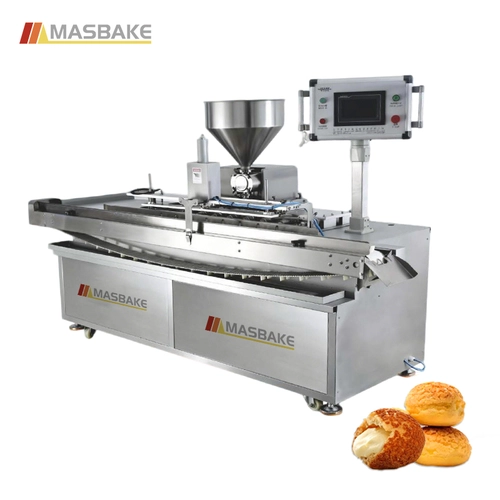
Food-Grade Stainless Construction All food-contact components are stainless steel, with an open frame design that allows the filling heads and blade area to be cleaned between shifts without dismantling the line.
Direct Connection to Packing Finished sandwiches discharge in a controlled orientation, so the unit can feed an automatic arranging and packaging line instead of requiring manual tray loading.
Lower Labour per Shift One operator supervises assembly, filling, and cutting together; the manual stacking and hand-cutting steps that normally sit between them are eliminated.
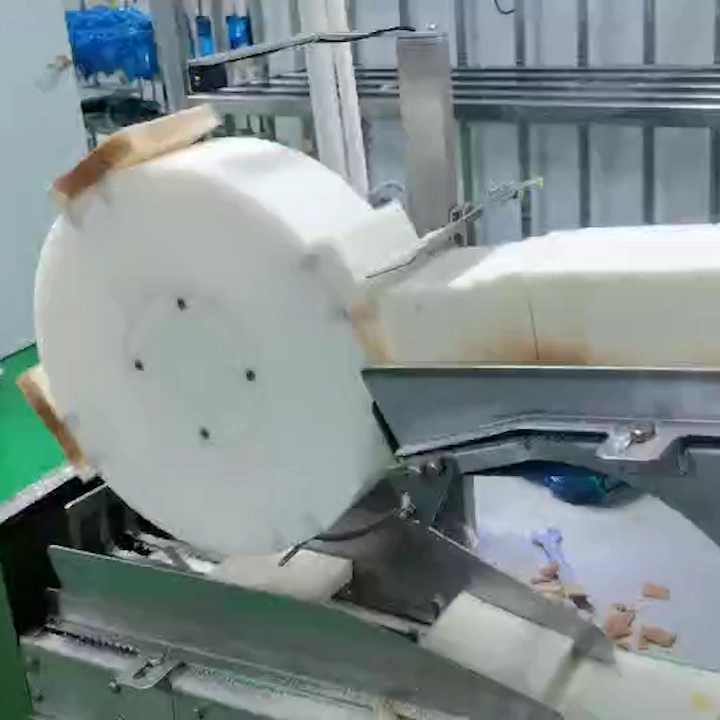
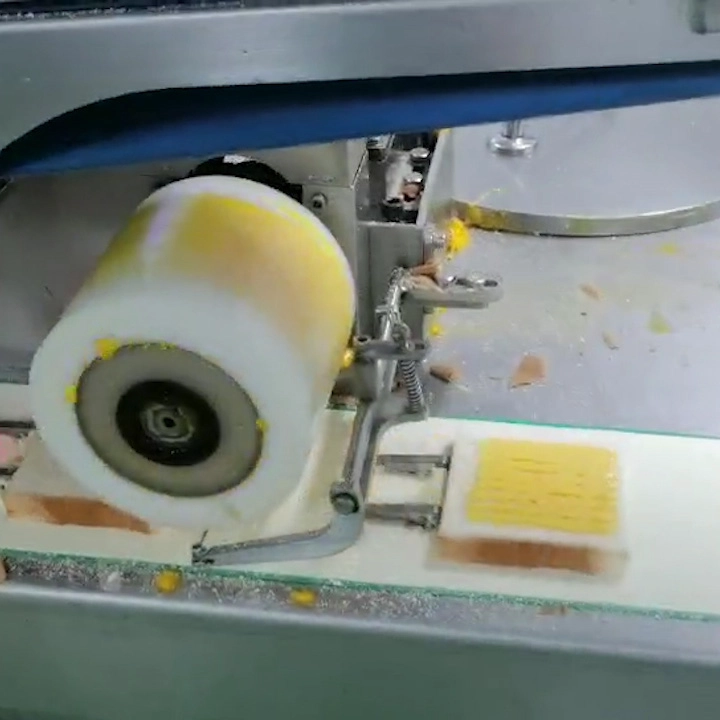
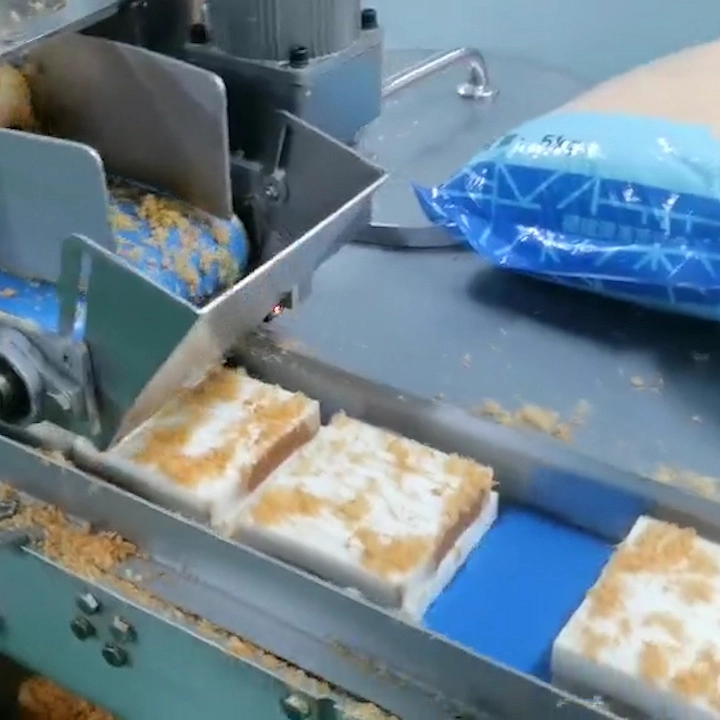
Pictures Show
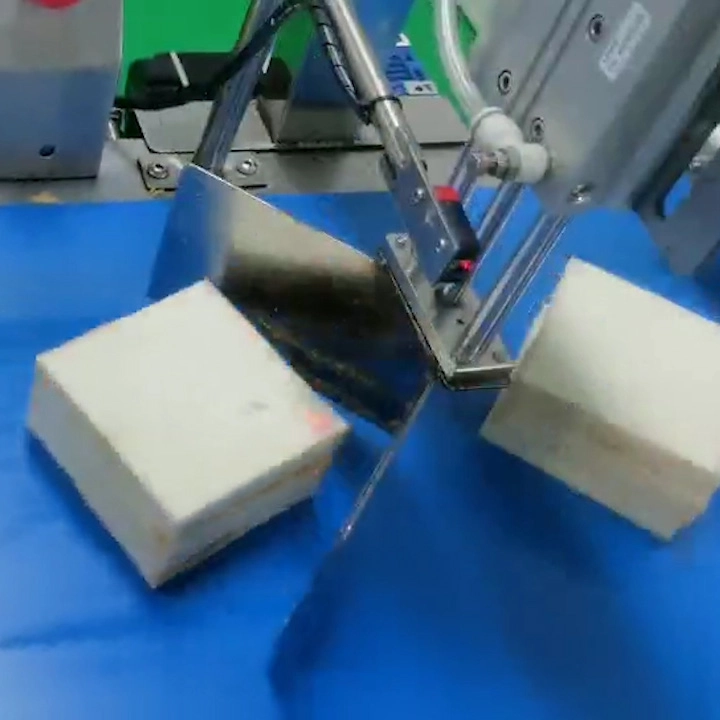
Application
The machine is specified for plants running continuous sandwich production rather than batch work: commercial bakeries supplying retail and convenience channels, sandwich and filled-bread factories, central kitchens, and contract manufacturers producing under retail own-brand programmes.
Format coverage is the practical selection point. Triangular cut sandwiches for chilled grab-and-go packs, three-layer rectangular sandwiches for foodservice, and round filled breads for bakery counters can all be run on the same unit, with the cut angle, portion size, and filling line set per product.
Cut format is also where most projects are actually won or lost, and it is where working with a bakery automation supplier in China pays off: the angle and portion size determine whether the sandwich loads cleanly into a wedge carton, a rectangular tray, or a flow-wrap infeed, and the packing layout is usually decided before the machine specification is fixed.
Customization Service
Most enquiries begin with one or two requirements that no catalogue model satisfies — a filling the standard head cannot handle, a cut angle dictated by an existing carton, or a capacity that has to match an upstream oven. Each custom bakery machine for sale from Masbake is therefore quoted against a confirmed specification rather than a model number, and the drawing is signed off before fabrication starts.
Customization covers:
- Filling system — number and position of filling heads, deposit volume range, and handling for high-viscosity or particulate fillings
- Cut geometry — diagonal angle, portion width, and blade spacing to match an existing pack format
- Capacity and speed — line speed matched to upstream baking and downstream packing, rather than the machine's standalone maximum
- Line interface — infeed and discharge heights, product pitch, and control signal handshake with neighbouring equipment
- Control and recipes — stored product parameters for fast changeover between formats
- Electrical and mechanical adaptation — supply voltage, frame height, and access orientation for the available floor space
Projects usually run in four steps: review of the product sample or drawing, written specification and quotation, fabrication with in-process checks, and a factory acceptance test with product before packing.